Low Water Pressure in UAE Villas? How to Choose a Booster Pump
Weak showers on the top floor? Here is what causes low pressure and which booster pump, pressure kit or tank upgrade fixes it.
Read guide
A vertical pressure kit starts a water pump when a tap opens and stops it when the flow stops, so pressure stays steady without manual switching. Alden’s kit runs on 220-240 V, handles up to 1.1 kW, is rated IP65 and offers four starting pressures for villas and small buildings in the UAE.
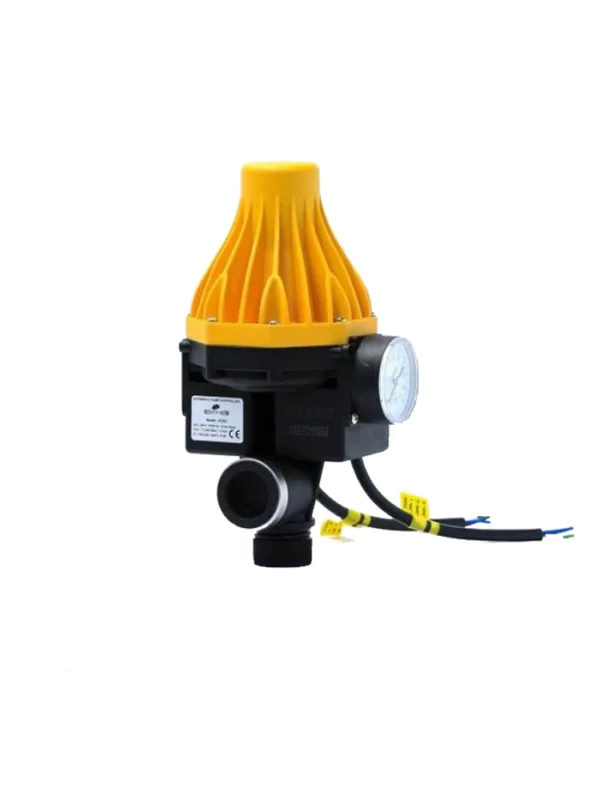
A vertical pressure kit is an automatic pressure controller that is fitted on the outlet pipe of a water pump. It starts the pump when a tap opens and stops it when the flow stops. Alden’s kit works on 220-240 V, handles up to 1.1 kW (10 A) and has starting pressures of 1.2, 1.5, 2.2 and 2.5 bar.
It is 7 pm in a villa in Al Khan and the whole family is home. Someone opens the upstairs shower, then someone else runs the kitchen tap, and the water slows to a trickle. The pump in the garage is off because nobody wants to walk down and switch it on. A pressure kit solves exactly that: the pump wakes up as soon as a tap opens and sleeps when it closes.
The kit sits on the pump outlet and senses both flow and pressure. When you open a tap, pressure drops below the set starting pressure and the kit switches the pump on. When you close the tap, flow stops and the kit switches the pump off after a short delay. A built-in non-return valve and gauge are typical in kits of this type.
"Vertical" refers to how it is mounted: upright on a vertical section of pipe. This keeps the unit compact in plant rooms and under-stair spaces.
| Parameter | Value |
|---|---|
| Input voltage | Single voltage, 220-240 V |
| Frequency | 50/60 Hz |
| Maximum current | 10 A |
| Maximum power | 1.1 kW |
| Starting pressure options | 1.2, 1.5, 2.2 and 2.5 bar |
| Protection rating | IP65 |
| Maximum working temperature | 60 °C |
| Connection thread | Confirmed on quotation |
Specifications as supplied by Alden. Need the datasheet, thread size or a price? Request a quote and mention your pump model and its rated current.
| Product | Model | Rating | Technical data | Enquiry |
|---|---|---|---|---|
| Vertical pressure kit | Vertical pressure kit | 220-240 V, up to 1.1 kW | Datasheet on request |
As a rule of thumb, 1 bar lifts water about 10 m. Add about 1 bar so the highest tap still gives a good flow. A higher starting pressure helps taller buildings; a lower one is gentler on single-storey homes and pipes.
| Setting | Typical use | Check before choosing |
|---|---|---|
| 1.2 bar | Single-storey homes, short pipe runs | Highest tap not far above the pump |
| 1.5 bar | Villas with one upper floor | Shower head height and pipe length |
| 2.2 bar | Two-storey villas, long runs, several taps at once | Pump can deliver this pressure |
| 2.5 bar | Taller buildings, long pipe runs | Pump head and pipe rating |
Typical guide only. The pump must be able to deliver the chosen starting pressure at the flow you need.
| Application | Typical setting | How the kit helps |
|---|---|---|
| Villa pressure boosting | Upper-floor showers, kitchens | Runs the booster only when a tap is open |
| Tank-fed supply | Ground or roof tank to taps | Steady pressure without manual switching |
| Garden and irrigation | Sprinklers and drip lines | Starts when a valve opens |
| Small commercial supply | Offices, shops, clinics | Automatic demand control |
| Well or tank transfer | Surface pump drawing from a tank | Stops the pump when flow stops |
| Situation | Manual pump | Pump with pressure kit |
|---|---|---|
| Opening a tap | Walk to the switch first | Pump starts by itself |
| Closing a tap | Pump keeps running or must be turned off | Pump stops after a short delay |
| Pump safety | Easy to run dry or forget | Helps stop dry running |
| Pressure | Varies with the tank level | Held at the set starting pressure |
Choose a pressure kit for a simple, compact, low-cost automatic set-up on a single pump. Choose a pressure switch and large tank where you want long rest periods and stable cycles. Choose an inverter booster for the smoothest pressure on a bigger building.
| Option | Strengths | Limits |
|---|---|---|
| Vertical pressure kit | Compact, automatic, low cost, little or no tank | Limited to about 1.1 kW (Alden kit) |
| Pressure switch + pressure tank | Stable cycles, long rest periods | Needs space for a tank |
| Inverter (variable-speed) booster | Smoothest constant pressure | Higher cost, more electronics |
| Manual switch only | Lowest cost | Easy to forget, no dry-run protection |
Choose the kit when you have one pump up to 1.1 kW and want hands-free pressure. For larger demand see booster pumps and pressure kits or read our guide to fixing low water pressure in UAE villas.
Common mistakes: choosing a starting pressure the pump cannot reach, using it on a pump above 1.1 kW, installing it upside down, and running a pump with no water in the suction line.
Typical practice is to wire the kit through a suitably rated protective device and to have a qualified electrician make the connection. The IP65 rating is explained in the IEC IP rating guide. Check the datasheet for any approvals before specifying it on a project.
An automatic pressure controller fitted on a pump’s outlet pipe. It starts the pump when a tap opens and stops it when the flow stops, so you do not switch the pump by hand. Alden’s kit works on 220-240 V and controls pumps up to 1.1 kW.
A basic pressure switch only reacts to pressure and usually needs a tank to avoid rapid cycling. A pressure kit typically combines flow and pressure sensing in one unit, so it can run a pump on demand with little or no tank and also help protect it against dry running.
Alden’s vertical pressure kit offers starting pressures of 1.2, 1.5, 2.2 and 2.5 bar. A higher setting suits taller buildings or longer pipe runs. We can help you choose from the height of your highest tap.
The kit is rated for a maximum of 10 A and 1.1 kW on a 220-240 V single-voltage supply. Check that your pump’s nameplate current is within 10 A. For larger pumps use a contactor or a different control panel.
Yes, it is the standard control partner for Alden’s AMH horizontal multistage booster pumps, provided the motor current is within the kit’s 10 A rating. Confirm the pump nameplate when you request a quote.
A small pressure tank still helps, because it smooths pressure and reduces short start-stop cycles when a tap is opened slightly. Many installations use a kit with a small expansion vessel. Tell us the demand and we will suggest a set-up.
Pressure kits of this type typically stop the pump when there is no flow, which helps stop it running dry. Alden’s information also lists motor burnout protection. Confirm the exact protection functions on the datasheet before relying on them.
IP65 means dust-tight and protected against water jets. It suits an indoor plant room or a sheltered outdoor spot, but not submersion. See the IEC IP rating guide for the full meaning of the rating.
The maximum working temperature is 60 °C, so it can handle warm water. It is not intended for boiling water or steam. For hot-water circulation applications ask us before you buy.
It can control a surface pump drawing from a tank or well. Submersible borehole pumps often use a different control, such as a control box with a pressure switch. Tell us the pump type and we will advise the right set-up.
Rapid cycling usually means a small leak, a tank with too little air, or a start pressure set close to the working pressure. Check taps and float valves, then the tank pre-charge. Our troubleshooting guide lists the checks.
Yes. Our team can supply the kit with the pump and arrange installation through our service team in Sharjah, Dubai and the rest of the UAE.
Share the application, the flow and head you need (or the pump you are replacing) and our team will come back with a recommendation and price. Prefer to talk? Call or WhatsApp us.